
Dubai Visa Medical Test: What to Expect When You Arrive in the UAE
After opening your company in the UAE, one of the next steps towards obtaining your residence visa is completing a mandatory medical examination. This examination is only one step in a much longer immigration journey, and the way that journey is organised can make the difference between spending an entire day in administrative appointments or finishing everything within a few hours.
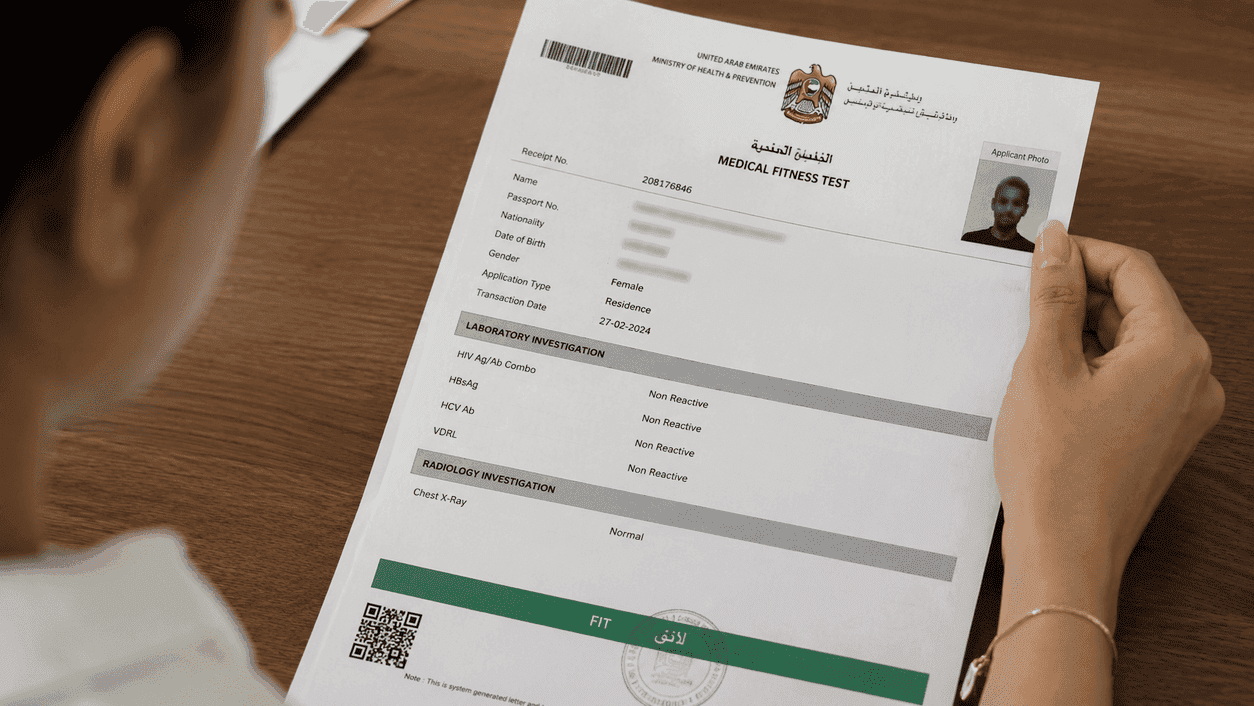
What Actually Happens on Your Medical Day?
Many people imagine that they'll simply visit a clinic, complete a few tests and go home. The reality is slightly different.
The medical examination is part of a broader immigration process that also includes your biometric registration and several administrative formalities before your residence visa can be issued.
Although these appointments are often scheduled on the same day, they're separate steps that need to be completed one after another.
Under the standard government process, it's common to spend most of the day travelling between appointments, waiting in queues and completing the different formalities required by the authorities.
What Does the Medical Examination Include?
The purpose of the medical examination isn't to evaluate your general health.
Instead, it's a routine screening required by the UAE authorities before issuing a residence visa.
For most applicants, the examination consists of:
a blood test,
a chest X-ray.
That's all.
Once completed, your results are sent electronically to the immigration authorities so your residence application can continue.
The Next Step: Biometric Registration
After your medical examination, you'll also visit an immigration centre where your biometric information is collected. Although they're frequently completed on the same day, they're not the same appointment.
The biometric appointment includes:
your fingerprints,
your photograph,
your digital signature.
These biometrics are then used to produce your Emirates ID, which becomes your official identity document once your residence visa has been approved.
If you've already read our guide on the Emirates ID, you'll know that this is the document you'll use almost every day after moving to the UAE, from opening a bank account to signing a tenancy agreement and accessing government services.
Two Ways to Complete the Same Process
At Monola, we have 2 different packages.
With the basic package, you'll follow the normal government timeline, often spending most of the day moving between appointments and waiting hours in queues. Your residence visa is typically issued within 7 to 10 days, followed by your Emirates ID 3 to 5 days later.
Our Premium package includes VIP medical services, express biometric registration, priority assistance and a private chauffeur, allowing the appointments to be completed in just a few hours. Your residence visa is then generally issued within 24 hours, with your Emirates ID arriving within 1 to 3 days.
You're not paying for a different medical examination. You're paying to remove hours of waiting and almost a week of administrative delays.
Final Thoughts
The UAE medical examination is often seen as one of the biggest milestones on the road to obtaining a residence visa. In practice, it's one of the simplest. The appointment itself is quick, straightforward and completed every day by thousands of new residents.
What really shapes your experience is everything that happens around it. From the medical examination and biometric registration to the final issuance of your residence visa and Emirates ID, the process involves several administrative steps that can take anywhere from a few hours to several days depending on the route you choose.
At Monola, we offer both the basic and premium process because every entrepreneur has different priorities. Some prefer to minimise costs, while others value saving time during one of the busiest moments of their relocation.
" height="27.109775px" id="SKxZ1GD3w" transform="translate(2.742 6.459)" width="35.01537499999998px"/></g></svg>)