
Why Entrepreneurs Are Moving to Dubai in 2026
Most entrepreneurs do not move to Dubai for one reason. Taxes may be what first attracts their attention, but the decision usually becomes more compelling when they look at the wider picture: how easily they can run a business, travel internationally, manage their time and build a stable life around their work.
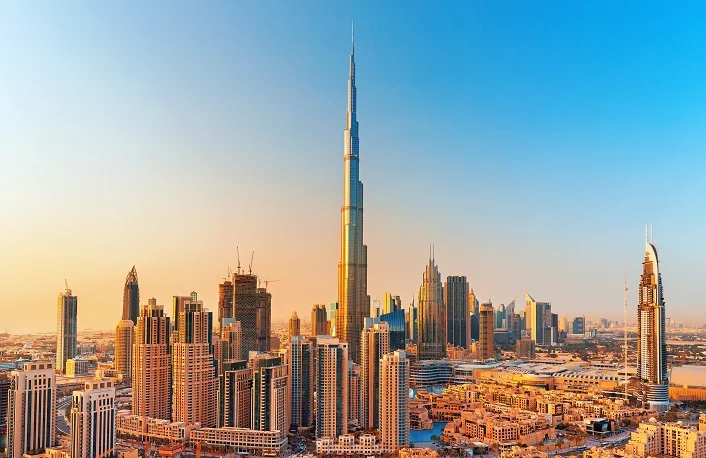
Dubai brings many of those advantages together in one place.
It offers a tax-efficient environment, strong global connections, modern infrastructure and a culture that is broadly comfortable with ambition. At the same time, moving there still requires careful planning. The cost of living can be high, banking compliance is serious, and a UAE residence visa does not automatically resolve your tax obligations elsewhere.
That is what makes Dubai interesting in 2026. Not the promise of an effortless life, but the possibility of building a more efficient one.
The Shift Is Bigger Than Taxes
Taxes are usually the first reason entrepreneurs look at Dubai. They are rarely the only reason they decide to move.
Running a business is shaped by more than the amount of tax you pay. It is also shaped by:
how much time you lose to administration,
how easy it is to travel,
whether banking works smoothly,
and whether the wider environment supports long-term growth.
This is where Dubai becomes more interesting.
Its appeal comes from the combination of financial efficiency, international connectivity, modern infrastructure and a relatively predictable business environment. Each advantage matters on its own, but together they can change how a company operates day to day.
For many entrepreneurs, the real objective is not simply to pay less tax. It is to build a business in a place where less energy is wasted on unnecessary friction.
Entrepreneurs Keep More of What They Earn
Let’s address the obvious part first. The UAE still offers one of the most tax-efficient environments in the world for entrepreneurs:
no personal income tax,
no capital gains tax for individuals,
no dividend tax,
no withholding tax.
The UAE introduced a 9% corporate tax in 2023, but only profits above AED 375,000 are taxable.
Compared to many Western countries where combined corporate and personal taxes can exceed 45–55%, the difference is substantial.
Dubai Is Built to Keep Things Moving
One of Dubai’s most practical advantages is not a single tax rule or business incentive. It is the speed at which many everyday processes can be handled.
Company formation, visa applications and government services are generally structured around clear procedures, digital platforms and defined timelines. That does not remove every complication, but it often reduces the amount of time entrepreneurs spend chasing documents or navigating slow administration.
The difference becomes visible in small, repeated moments:
setting up a company without months of back-and-forth,
completing residency steps through a relatively organised process,
accessing government services online,
and resolving administrative tasks without dealing with several disconnected authorities.
Dubai is not bureaucracy-free. Banks still conduct detailed compliance checks, regulated activities require additional approvals, and poorly prepared applications can still slow everything down.
The advantage is that the system is largely designed around execution. For entrepreneurs, that can make daily life feel more efficient, and leave more energy for the business itself.
Dubai Works as a Base for International Business
Many entrepreneurs who relocate to Dubai are not moving there to serve the local market.
Their clients may be in Europe, their team in Asia and their suppliers spread across several countries. What they need is not a traditional headquarters, but a place from which international operations are easier to coordinate.
Dubai is well suited to that role because it combines:
strong flight connections,
useful timezone overlap with Europe and Asia,
access to international banking and professional services,
and a business environment built around cross-border activity.
The value is not simply being located in Dubai. It is being connected to several markets from one base.
A consultant can speak with Asian clients in the morning and European clients later in the day. An e-commerce founder can manage suppliers, logistics partners and remote teams without being tied to one customer market.
This is why Dubai appeals to agency owners, investors, SaaS founders and other internationally focused entrepreneurs. They do not necessarily need to build a business in Dubai. They need a base that makes it easier to operate everywhere else.
Safety and Stability Matter More Than People Expect
Entrepreneurs often begin by comparing taxes, business costs and company structures. But once the move becomes real, more personal questions start to matter.
Can you walk home late without constantly thinking about security? Does the city feel orderly? Can you make long-term plans without worrying that the rules will suddenly change?
Dubai’s appeal partly comes from the sense of predictability it offers. Daily life is highly structured, public spaces are generally well maintained, and the city is built around people who expect to work, invest and plan internationally.
That stability has a practical effect:
families feel more comfortable relocating,
entrepreneurs can focus on work instead of constant uncertainty,
and long-term decisions become easier to make.
Safety is not just a lifestyle benefit. It affects how confidently people build their lives.
This does not mean Dubai is perfect or immune to change. But for many entrepreneurs, the combination of personal security and institutional stability becomes one of the strongest reasons to stay.
The UAE Is Playing a Long-Term Game
The UAE continues to invest in infrastructure, technology, logistics, finance and sectors designed to attract international talent. For entrepreneurs, that matters because the value of a location depends partly on where it is heading, not just where it is now.
That long-term direction is visible in several ways:
new business districts and transport links,
policies designed to attract skilled professionals and investors,
investment in digital government and emerging industries,
and a willingness to adapt regulations as the economy evolves.
People are not only choosing a tax system. They are choosing an environment they believe will remain competitive.
Of course, no country can guarantee uninterrupted growth. Rules change, costs rise and new challenges emerge. But the UAE’s broader strategy is relatively clear: attract capital, talent and businesses that can contribute over the long term.
That sense of direction makes Dubai easier to commit to, not just as a temporary base, but as a place where a business and a life can develop over time.
But Dubai Is Not “Easy Mode”
Dubai can make certain aspects of business and daily life more efficient, but it does not remove responsibility.
Companies still need proper accounting, banking compliance, tax planning and careful administration. Relocation also comes with real costs, cultural adjustments and decisions that are easy to underestimate from abroad.
Cost of Living Is Higher Than Many Expect
Dubai can become expensive quickly. Especially for:
rent,
schools,
healthcare,
visas & company license renewals,
maintaining a certain lifestyle
Some entrepreneurs move expecting to dramatically reduce living costs and are surprised when expenses rival cities like London or Singapore.
The financial upside comes less from “cheap living” and more from: tax efficiency, business opportunity, and wealth preservation.
Banking and Compliance Are Serious
The UAE banking system has become significantly stricter over the last few years.
Opening corporate bank accounts now requires:
clear documentation,
business legitimacy,
compliance transparency,
and proper structuring.
This is especially true for: crypto businesses, international trading companies, or founders from higher-risk jurisdictions.
Trying to “hack” the system usually backfires. Dubai increasingly rewards entrepreneurs who structure things properly.
Relocating Correctly Matters
One of the biggest misconceptions is that simply moving to Dubai automatically eliminates taxes in your home country.
In reality, exiting a tax system properly can be complex.
Depending on your country, you may need to deeply think about:
breaking tax residency,
reducing economic ties,
restructuring your company,
changing ownership structures,
selling real estates you own.
A Dubai company alone does not automatically solve international tax exposure.
Dubai Changes the Way Ambition Feels
Some cities make ambition feel uncomfortable. Dubai tends to make it feel normal.
The city is full of people building companies, changing careers, investing and starting again in a new country. That creates an environment where growth is not treated as something unusual or excessive.
For entrepreneurs, this can have a real psychological effect:
bigger goals feel more realistic,
meeting ambitious people becomes part of daily life,
and progress feels socially encouraged rather than questioned.
Environment shapes behaviour more than most people realise.
Dubai does not make someone more disciplined or successful overnight. But being surrounded by movement, investment and visible ambition can change what feels possible.
For some entrepreneurs, that shift in mindset becomes just as important as the practical advantages of living there.
Is Dubai Right for Every Entrepreneur?
Dubai works particularly well for entrepreneurs whose businesses are international, flexible and not heavily tied to one local market.
It may be a strong fit for consultants, agency owners, investors, e-commerce operators and founders who value tax efficiency, safety, global connectivity and a fast-moving environment. But those advantages matter less when the business depends on customers, employees or infrastructure that remain elsewhere.
The decision also depends on the life behind the business:
whether your family is ready to relocate,
whether the cost of living fits your income,
whether you are comfortable with the climate and pace of the city,
and whether your tax and business structure can be moved properly.
A good relocation should improve the whole picture, not just one line on a tax calculation.
Dubai can offer an excellent environment for growth, but only when it matches the way you work, the way you live and the future you are actually trying to build.
Final Thoughts
Entrepreneurs are not moving to Dubai because it offers one perfect advantage. They are moving because several factors come together: lower taxation, efficient administration, international connectivity, personal safety and a culture that is comfortable with ambition.
That combination can make both business and daily life feel easier to organise.
But relocation only works when the structure behind it is sound. A residence visa is not the same as tax residency, a company licence does not replace proper compliance, and a lower-tax environment is only valuable when it fits the reality of your business and personal life.
Dubai is not automatically the best place for every entrepreneur. It is simply a place where the right entrepreneur can build with less friction.
The decision should therefore begin with a practical question: not whether Dubai is attractive, but whether it supports the business, lifestyle and long-term direction you are actually trying to create.
FAQ
Why are so many entrepreneurs moving to Dubai?
Entrepreneurs are moving to Dubai because of its tax efficiency, international connectivity, business-friendly environment, safety, and modern infrastructure. Many also see Dubai as a stable long-term base for global business operations.
Is Dubai really tax-free?
Dubai has no personal income tax. However, the UAE introduced a 9% corporate tax on profits above AED 375,000. Depending on your business structure and home country tax rules, additional taxes may still apply.
Is Dubai good for startups?
Yes. Dubai offers strong infrastructure, fast company setup processes, international talent access, and growing startup ecosystems, especially in sectors like fintech, AI, e-commerce, logistics, and digital services.
What are the downsides of moving to Dubai?
Common challenges include high living costs, banking compliance requirements, company setup costs, and the complexity of properly exiting your home country’s tax system.
Can I move to Dubai and avoid taxes legally?
Possibly, but it depends heavily on your citizenship, tax residency, business structure, and how you exit your current country. Professional tax planning is often necessary.
" height="27.109775px" id="SKxZ1GD3w" transform="translate(2.742 6.459)" width="35.01537499999998px"/></g></svg>)